How to Keep Your Circulation, Lymph, and Muscles Alive
What Is Fascia — and Why It Matters for Circulation
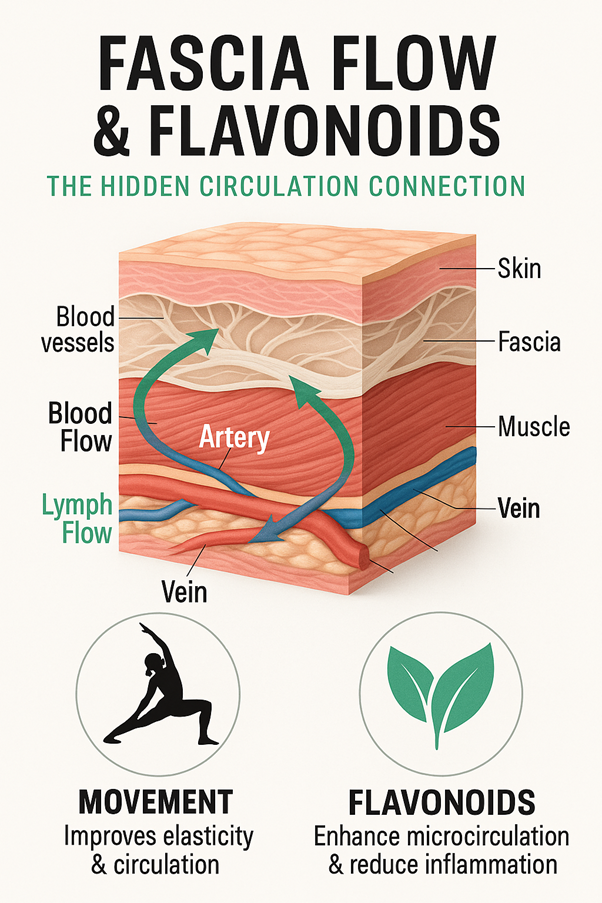
Fascia is the thin web of connective tissue that surrounds and connects every muscle, vessel, nerve, and organ in your body.
It’s like a flexible internal network that keeps everything sliding, gliding, and moving smoothly.
But when fascia becomes tight, dehydrated, or immobile, it restricts:
- Blood flow (capillaries get compressed)
- Lymphatic drainage (waste removal slows)
- Muscle elasticity and oxygen delivery

Over time, this can cause:
- Leg heaviness or swelling
- Poor recovery after exercise
- Stiffness, fatigue, and pain
- Increased inflammation in tissues
Schleip R., Fascia Research Congress 2022:
Fascia is richly innervated and plays a key role in fluid transport and microcirculation. Its elasticity supports both blood flow and lymphatic flow.
How Fascia Flow Affects Circulation
When your fascia moves freely, it acts like a hydrated sponge — helping push blood, lymph, and nutrients through your tissues.
But prolonged sitting, stress, dehydration, and lack of movement can cause fascia to dry out and stiffen, blocking the natural “fluid highways” of the body.
Imagine your body like a river system:
- The arteries and veins are the big rivers
- The fascia and capillaries are the tiny streams that deliver oxygen and nutrients to every cell
If those streams are compressed or stagnant, circulation slows — even if your heart is strong.
💡 Keeping fascia healthy is one of the best ways to enhance microcirculation, recovery, and tissue oxygenation.
Best Exercises for Fascia Flow & Circulation
To keep fascia supple, movement should be dynamic, elastic, and multidirectional — not just rigid strength training.
Here are some of the best fascia-friendly circulation exercises:
Gentle Stretch & Bounce
- Perform slow, rhythmical bouncing or shaking to activate fascial recoil
- Boosts lymph flow and venous return
Foam Rolling or Myofascial Release
- Helps rehydrate and “unstick” fascial layers
- Improves blood and oxygen delivery to tight areas (calves, hamstrings, glutes)
Calf Raises & Ankle Circles
- Reactivate the calf muscle pump — the “second heart”
- Restores leg circulation after sitting
Dynamic Walking or Yoga Flow
- Alternating stretches, squats, and lunges lengthen fascia and stimulate lymphatic drainage
Findley TW, Fascia Research, 2020:
Fascial stretching improves local blood flow and interstitial fluid movement — enhancing tissue healing and recovery.
Hydration & Fascia Health
Fascia is ~70% water — it needs hydration and movement to stay flexible.
Dehydration makes fascia “sticky” and thick, restricting circulation.
Tips:
- Drink water throughout the day
- Move or stretch every hour
- Add electrolytes or lemon water for better absorption
How Flavonoids Support Fascia and Flow
Flavonoids (Diosmin, Hesperidin, Horse Chestnut) work inside the vascular and lymphatic systems — supporting fascia’s natural fluid dynamics.
1. Improve Capillary Strength & Oxygen Flow
Flavonoids strengthen the smallest blood vessels inside fascia, improving microcirculation and nutrient exchange.
Boisseau MR, Drugs, 1997:
MPFF (Diosmin + Hesperidin) enhances capillary integrity and oxygen diffusion through tissues — essential for fascia hydration.
2. Reduce Swelling & Tissue Pressure
When circulation slows, fascia can become congested with fluid.
Horse Chestnut extract (Aescin) reduces edema and improves lymphatic drainage, relieving heaviness and tightness in the fascia.
📚 Sirtori CR, Pharmacol Res, 2001:
Aescin decreases capillary permeability and inflammation, improving venous tone and interstitial fluid balance.
3. Anti-Inflammatory & Antioxidant Protection
Fascia is sensitive to inflammation and oxidative stress — both increase stiffness and pain.
Flavonoids neutralize free radicals, protect collagen, and reduce inflammatory mediators (like IL-6 and TNF-α).
📚 Rees A et al., Nutrients, 2018:
Citrus flavonoids improve vascular inflammation markers and endothelial function.
Fascia Flow + Flavonoids = Complete Circulation Care
| Support | From Movement | From Flavonoids |
| Venous & lymph flow | Calf & dynamic movement | Diosmin + Hesperidin |
| Capillary strength | Stretching & hydration | Horse Chestnut (Aescin) |
| Oxygen & nutrient delivery | Fascia glide & elasticity | MPFF (Diosmin/Hesperidin) |
| Reduced inflammation | Regular mobility | Flavonoids’ antioxidant action |
Together, fascia flow and flavonoids support:
✅ Better microcirculation and oxygenation
✅ Less swelling and stiffness
✅ Improved recovery and energy
✅ Healthy, flexible tissues at every age
PureLife Nutrition Flavonoids & Venalex
Pharmaceutical-grade circulation and fascia support
Each capsule contains:
- 150 mg Diosmin
- 150 mg Hesperidin
- 150 mg Horse Chestnut Extract (Aescin)
✅ GMP & ISO Certified
✅ CoA-tested for purity and potency
✅ No unnecessary fillers or colorants
✅ Pure active ingredients that enhance microcirculation and reduce inflammation
In Summary
Fascia is your body’s hidden circulation network — when it flows, you feel energized, light, and pain-free.
Daily fascia movement + clinically proven flavonoids = stronger veins, better oxygen delivery, and smoother, healthier tissues.
Move your body. Hydrate your fascia. Support your circulation with PureLife Flavonoids.
Your flow starts within. 🌿